For decades, Just-in-Time manufacturing has been a cornerstone of efficient production. The principle is straightforward- keep inventory lean, minimise waste and bring materials and components into production when they are needed.
For many industries, it remains an effective model. But medical device manufacturing operates under different pressures.
Products are highly regulated. Quality cannot be compromised. Manufacturing processes often require specialised tooling and validation. Supply interruptions can have consequences far beyond a missed delivery date.
In this environment, the question is no longer simply: How efficiently can we manufacture?
It is increasingly: How resilient is the manufacturing system behind the product?
Efficiency is only one part of the equation.
The drive towards lean manufacturing has delivered enormous benefits. Reducing excess inventory, improving processes and eliminating waste all contribute to more efficient operations. But efficiency can introduce vulnerability when every part of a supply chain is tightly synchronised.
A delayed component, an unexpected tooling issue, a material shortage or a disruption at a specialist supplier can quickly affect production further downstream.
Medical device companies therefore face a difficult balancing act…. maintaining the efficiencies of a lean operation while building enough flexibility into the supply chain to absorb disruption. That requires a broader definition of manufacturing performance.
Resilience needs to be engineered in.
Resilience is not simply about holding more stock.
It is about understanding where the critical dependencies exist within a manufacturing process and having the capability, knowledge and relationships to respond when circumstances change.
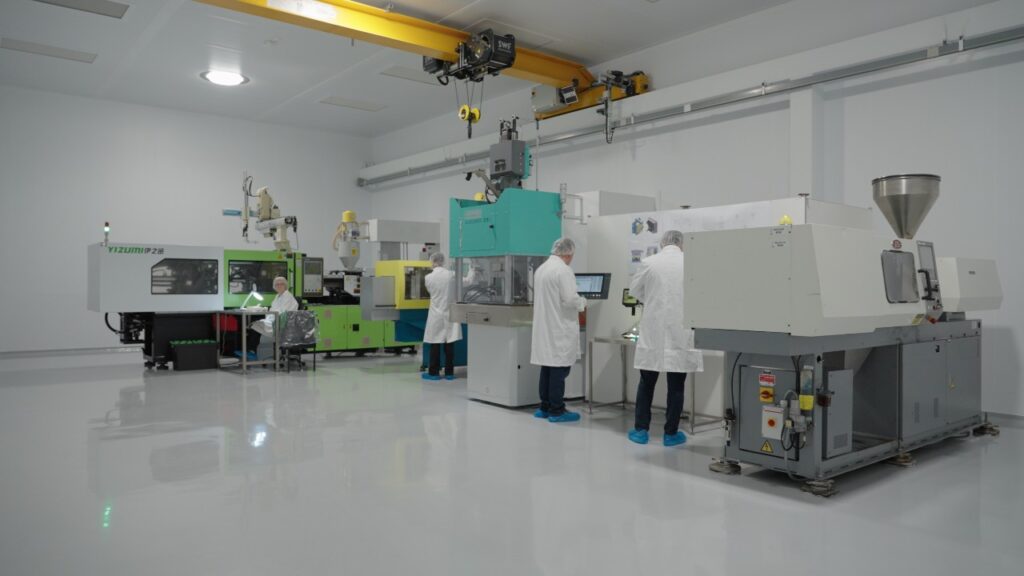
For medical device components, that can mean considering everything from tooling and mould design through to materials, production capacity, inspection and validation.
The more disconnected these activities are, the more difficult it can be to respond quickly.
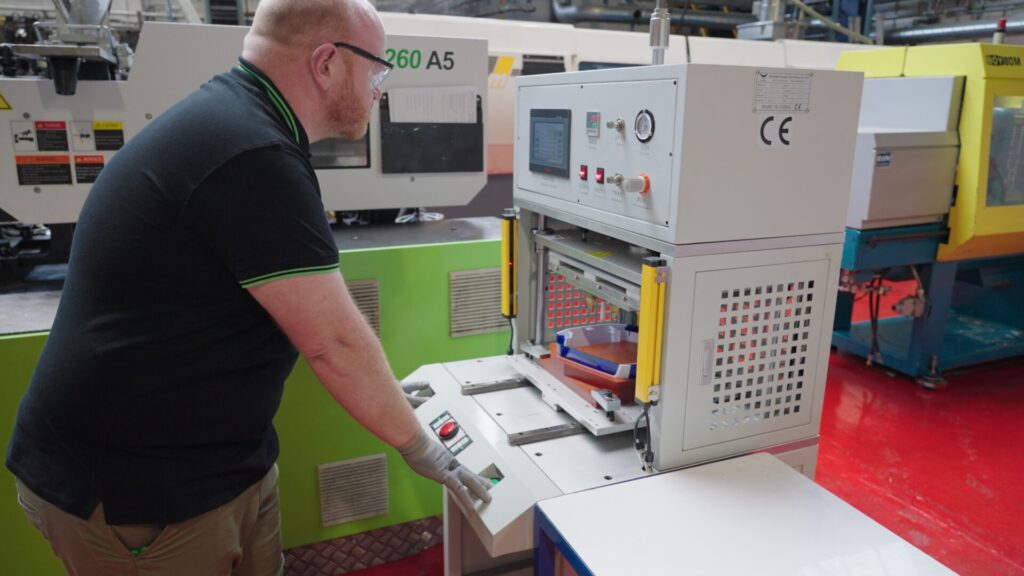
An integrated manufacturing partner can provide a different model. One where engineering knowledge, tooling expertise and production capability are connected from the outset.
That integration can become particularly valuable when a project needs to change.
Agility starts much earlier than production.
Manufacturing agility is often associated with how quickly a factory can increase or decrease output. In reality, it starts much earlier.
A component that has been designed with manufacturability in mind is more likely to transition efficiently into tooling and production. A tool designed with the production process in mind can support greater consistency and reduce avoidable issues later in the product lifecycle.
This is why the relationship between design, tooling and manufacturing matters. When these stages are treated as separate activities, opportunities to improve the overall process can be missed. When they are considered together, decisions made early in the lifecycle can strengthen both efficiency and resilience further down the line.
The value of a long-term manufacturing relationship.
This also changes the role of the manufacturing supplier. The traditional model can be transactional. Develop the product, source the tooling, manufacture the component and move on to the next project.
A longer-term partnership is different. It creates an opportunity for the manufacturer to build a deeper understanding of the product, its requirements and the challenges involved in producing it consistently.
For medical device companies, that accumulated knowledge has real value. It can support future design changes, production scaling, process improvements and the introduction of new products — without having to rebuild the entire manufacturing relationship each time.
Moving beyond Just-in-Time.
The answer is not necessarily to abandon Just-in-Time manufacturing. It is to recognise that efficiency and resilience are not the same thing.
The medical device industry needs manufacturing models that can deliver both. That means looking beyond unit cost and delivery times to consider the wider manufacturing ecosystem. Who understands the tooling? Who understands the moulding process? Where does the engineering expertise sit? How quickly can changes be made? How easily can production scale? And how much of the product lifecycle can one trusted partner support?
The strongest manufacturing strategies may therefore be those that combine lean production with deeper technical capability, closer collaboration and greater flexibility. For medical device manufacturers, resilience is becoming less about reacting to disruption and more about designing the manufacturing relationship to withstand it.
The future may not belong to the leanest supply chain. It may belong to the most adaptable one.
At Tool & Gauge, we believe resilient manufacturing starts with closer collaboration, deeper technical capability and a connected approach from design through to manufacture. Have a project on the horizon? Talk to Tool & Gauge about how our full-cycle approach can support your journey from design to manufacture.
Visit: www.tag.ie
Email: info@tag.ie
Phone: 353 7191 85063