A medical component can look straightforward on a drawing and still create problems at assembly, inspection or production release. For an OEM or CDMO outsourcing injection moulding, the strongest starting point is a shared definition of what an acceptable component must do and how conformity will be demonstrated.
For recurring supply, that definition must hold beyond the initial samples. Tool & Gauge combines contract medical moulding with materials selection, polymer problem-solving and component DFM advice for complex small parts.
Why does assembly context matter when outsourcing moulding?
A part can meet its drawing and still cause problems at assembly, so your moulder needs to understand how it works in the finished device. Bring the drawing revision, mating interfaces, critical dimensions and functional requirements. Share the specified resin grade, or explain where material selection remains open. Identify sealing, bonding or moving interfaces and acceptable limits for flash and gate vestige. Our DFM role is to support and advise your component design team.
If a dimension affects assembly force or fit, explain the relationship. This helps engineering teams focus the manufacturing and inspection plan on the features that matter to the finished device.
How are tooling and process development linked in medical moulding?
Tooling decisions and moulding behaviour are closely linked, so they should be developed together. Before committing to production, agree how trials will establish acceptable processing conditions and how issues will be separated into material, tooling, process or measurement causes.
For a component that is difficult to mould consistently, share failed samples and trial history where available. A useful investigation considers polymer behaviour, tool design and processing together. Our tooling, moulding and metrology services support that discussion without assuming that a material substitution alone will solve the problem.
What release evidence should a medical moulding programme agree?
Each programme should agree its handling, packaging and cleanliness controls, the records that must accompany a shipment, and who approves any deviation. Where sterilisation compatibility is relevant, include it in the material and component requirements from the outset.
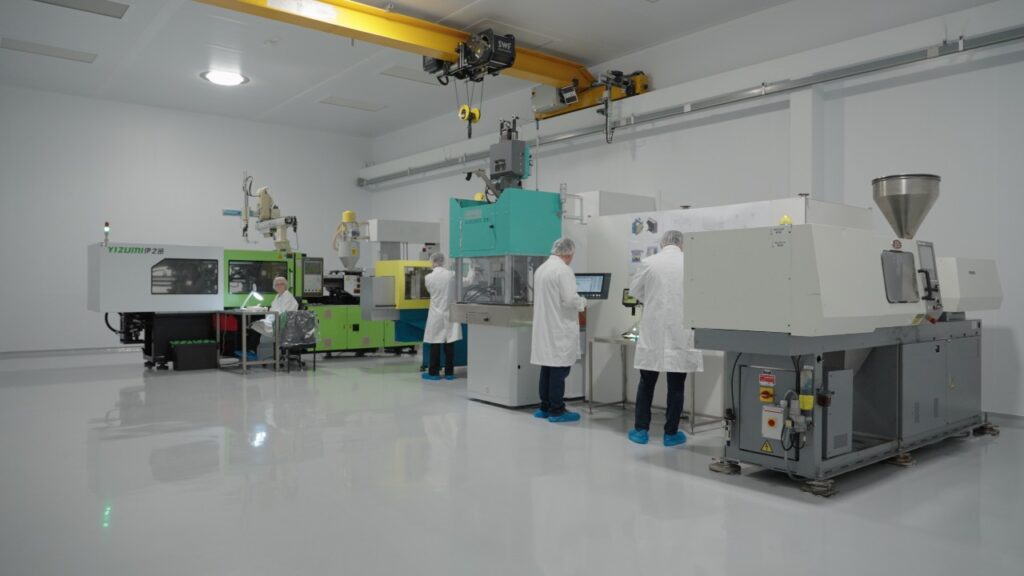
We provide medical component moulding through a purpose-built Class 8 cleanroom, alongside controlled-environment assembly services. Our component manufacturing division is ISO 9001 and ISO 13485 certified.
Qualification planning should establish the applicable IQ, OQ and PQ activities, acceptance criteria and responsibilities. Tool & Gauge’s published validation services include these activities, validation reporting and material lot traceability. The programme-specific scope should be agreed before execution.
How should you plan for repeat orders?
Plan for repeat orders by agreeing forecasts, order quantities, lead times and change notification from the outset. For an SME approaching commercial launch, demand may still be uncertain. An established multinational may need an additional source or capacity for a defined product family. Both need that agreement to be realistic.
Discuss tool ownership, maintenance responsibilities, resin availability and the response to rejected material. These details help purchasing and manufacturing teams assess the full supply arrangement rather than comparing piece prices alone.
Frequently asked questions
Share the drawing revision, critical dimensions, mating interfaces, specified resin grade and expected volumes. This lets Tool & Gauge focus DFM, tooling and inspection on the features that matter to the finished device.
Yes. Tool & Gauge provides medical component moulding in a Class 8 cleanroom in Ireland, alongside controlled environment assembly. Its component manufacturing division is certified to ISO 9001 and ISO 13485.
Yes. Validation services include IQ, OQ and PQ activities, validation reporting and material lot traceability. The scope for each programme is agreed with the customer before work begins.
Looking for a medical moulding partner in Ireland? Email info@tag.ie with your component requirements, current challenges and forecast volumes, and our team will talk you through DFM, tooling and cleanroom production.