An endovascular aortic device programme includes more than the implanted stent graft. The delivery system must also provide the mechanisms used to introduce and deploy it. Commercial systems can incorporate an integrated handle with controlled deployment functions, making the delivery assembly an important focus for component engineering.
Where a design uses small moulded controls or internal locating features, repeat production must preserve the characteristics on which the assembly depends. The contract moulding brief should connect polymer requirements and part geometry with the intended mechanism.
Which features matter most in a delivery system component?
The features that guide movement, locate other parts or retain the assembly matter most. Identify these on each proposed housing or control component, and discuss the relevant clearances and tolerance stack with the moulding partner before freezing the inspection plan.
For example, two housing halves may each meet their individual drawings while an overlooked combination of tolerances affects an internal moving part. Reviewing the assembled condition helps the design team decide which dimensions and functional checks are meaningful.
The acceptance plan should follow the device design and its risks, rather than applying the same dimensional checks to every surface.
How should polymer selection connect to the processing route?
Polymer selection should start from the component’s function and take account of downstream joining, sterilisation and processing. Tool & Gauge supports materials selection and polymer problem-solving for complex small moulded parts, alongside component DFM advice. Start with the required function and specified resin, or the material options under consideration.
Trials should provide representative parts for the customer’s assembly and functional evaluation. Agree the condition in which parts are measured and tested, particularly where downstream processing could affect the features under review.
This input supports the customer’s component design decisions. Material suitability and any proposed design changes still need to be assessed and approved within the customer’s development process.
What should a cleanroom moulding control plan include?
A control plan should cover critical features, inspection methods, handling and packaging requirements, traceability expectations and release responsibilities. Qualification scope and any required assembly testing should be agreed with the customer before production approval.
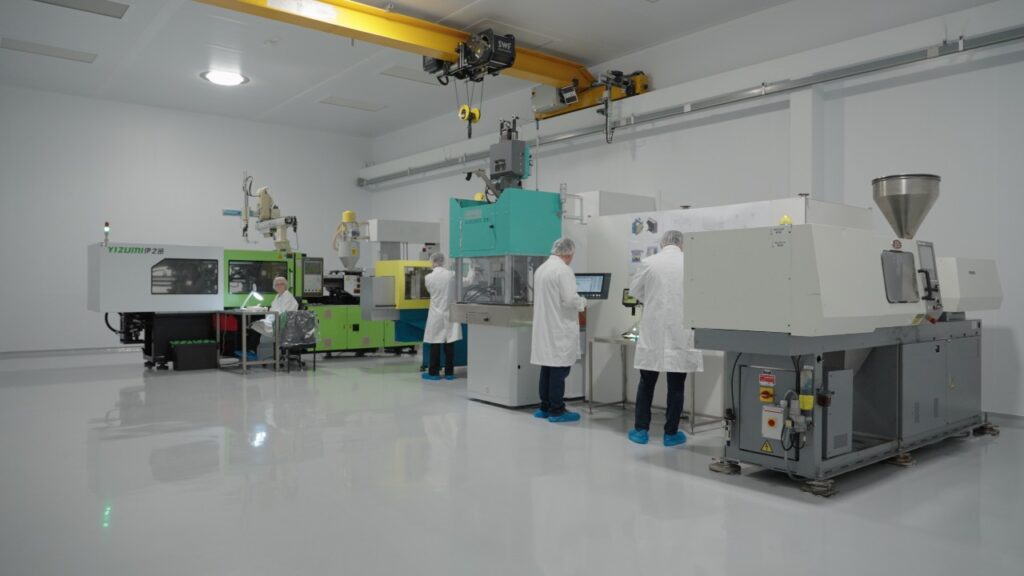
Tool & Gauge offers medical component contract manufacturing in a Class 8 cleanroom, supported by tooling, metrology and validation services. This provides a basis for discussing outsourced component production with OEMs and CDMOs developing endovascular delivery assemblies.
How do you manage variants and ongoing supply?
Separate shared components from variant-specific parts, and keep drawings, tooling identification and orders aligned. A delivery platform may include several sizes or configurations, so this needs to be clear from the start.
Supply chain teams should also define demand assumptions and change-notification requirements. Engineering and quality teams need to assess proposed changes to materials, tooling or processing against the approved component and assembly requirements.
Frequently asked questions
It is the device used to introduce and deploy an implant such as an aortic stent graft, often with a handle that controls deployment. The small moulded housings and controls inside it need to perform consistently in every assembly.
Two parts can each meet their own drawing while their combined tolerances still affect a moving part inside the assembly. Reviewing the assembled condition helps decide which dimensions and functional checks really matter.
Yes. Trials should provide representative parts for the customer’s own assembly and functional evaluation, measured and tested in an agreed condition. This matters where downstream processing could affect the features under review.
Moulding parts for a delivery system? Send your component details, material or moulding challenges and forecast demand to info@tag.ie, and talk to our team in Ireland about ongoing contract manufacture.